

Orvieto is not a stop. It’s a destination.
There is a way of travelling that is about lists. Cities to tick off, places to photograph, stops to complete. It’s a legitimate way — no one questions it — but with certain places it doesn’t work. Orvieto is one of those places.
It is not a city you consume in three hours. Not a city you understand through a coach window, nor one that is exhausted by the Duomo and a quick lunch. It is a city that asks for time. Not much — a weekend is enough — but real time, unhurried, without a schedule that is too tight.
Those who pass through only briefly sense it: there is something that slips away. Something that stays just outside the frame.
The city you don’t see from the main square
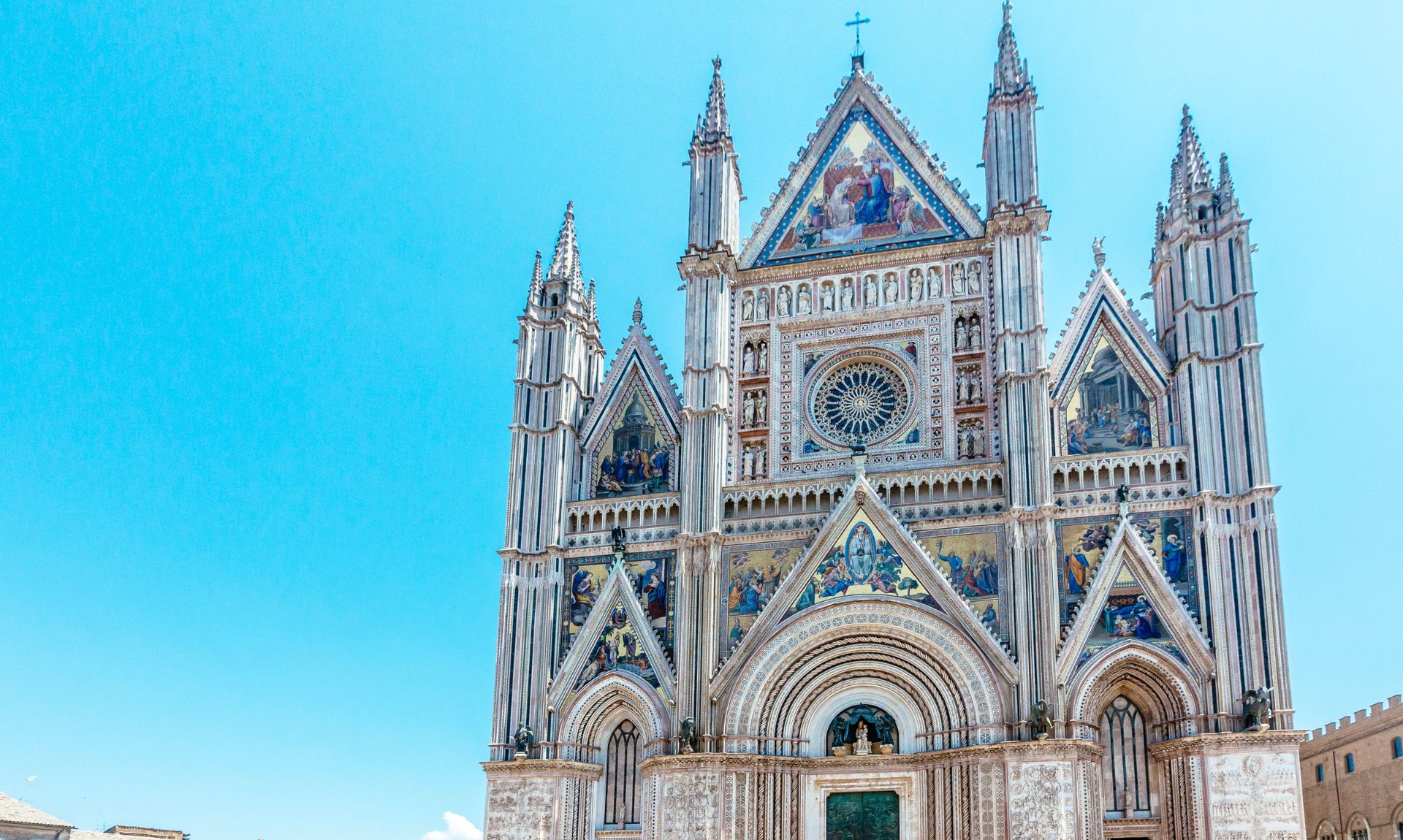
The Duomo is unavoidable, and rightly so. The Gothic façade is one of those things you don’t forget — three centuries of work, more than twenty artists, and the result is still there, intact, bearing the weight of the centuries without looking tired.
But Orvieto is not only this. It is the lanes that descend toward the cliff, where passing tourists almost never reach. It is Piazza del Popolo on a Thursday morning, when the market fills the space with voices and colours that have nothing manufactured about them. It is Underground Orvieto — the labyrinth of caves and tunnels carved into the tufa over more than two thousand years — telling the story of a parallel city, invisible from above.
It is the Torre del Moro striking the hours, and the sound spreading across the rooftops as you walk without a destination.
All things that require time. All things that those who pass through never see.
The right pace
Orvieto has its own rhythm. It is slow, in the best sense of the word — not empty, not lazy. It is the rhythm of a city that has existed for centuries and is in no hurry to prove anything. The best things are found by walking, not by searching.
One free afternoon, with no fixed destination, in this historic centre gives back more than any planned itinerary. The lanes always lead somewhere. The piazzas open up when you least expect them. People still have time to answer if you ask something.
It is a kind of travel that has been somewhat lost — and that Orvieto, almost by historical inertia, has preserved.
Why staying makes all the difference
Sleeping in Orvieto — not nearby, not in a farmhouse outside the cliff — changes the experience in a substantial way. It changes the evening, when the tour groups leave and the historic centre returns to its residents. It changes the morning, when the city is still quiet and you can walk without anyone ahead of you. It changes the light, which at certain hours on the tufa stone becomes something that does not exist in photographs.
Those who stay one night take away an impression. Those who stay two or three nights take away something different — a familiarity, a sense of the place that cannot be built in a hurry.
It is the difference between having been to Orvieto and having come to know Orvieto.
A base in the historic centre
Hotel Posta is two hundred metres from the Duomo, in the historic centre, inside a sixteenth-century noble palazzo. It is not a convenient location — it is the right location for those who want to live Orvieto, not merely visit it. You step outside, and you are already inside the city. You return, and you are still inside the city.
For those who choose to truly stay, it is the place to begin.