

Staying in Orvieto means immersing yourself in a land where history, nature, and traditions coexist in perfect harmony. Beyond the extraordinary beauty of its historic center, with its medieval alleys, charming squares, and traces of a millennia-old past, the city is also the ideal starting point for exploring the surrounding area, rich in hidden gems.
Within less than 40 minutes by car, you can reach enchanting villages where time seems to have stood still. These destinations are perfect for a day trip, best enjoyed at a leisurely pace, guided by curiosity and the pleasure of discovery. Each village offers a different experience, yet all share the authentic charm of a region that never ceases to surprise.
Here are some of the most beautiful villages near Orvieto to visit on a day trip.
Civita di Bagnoregio
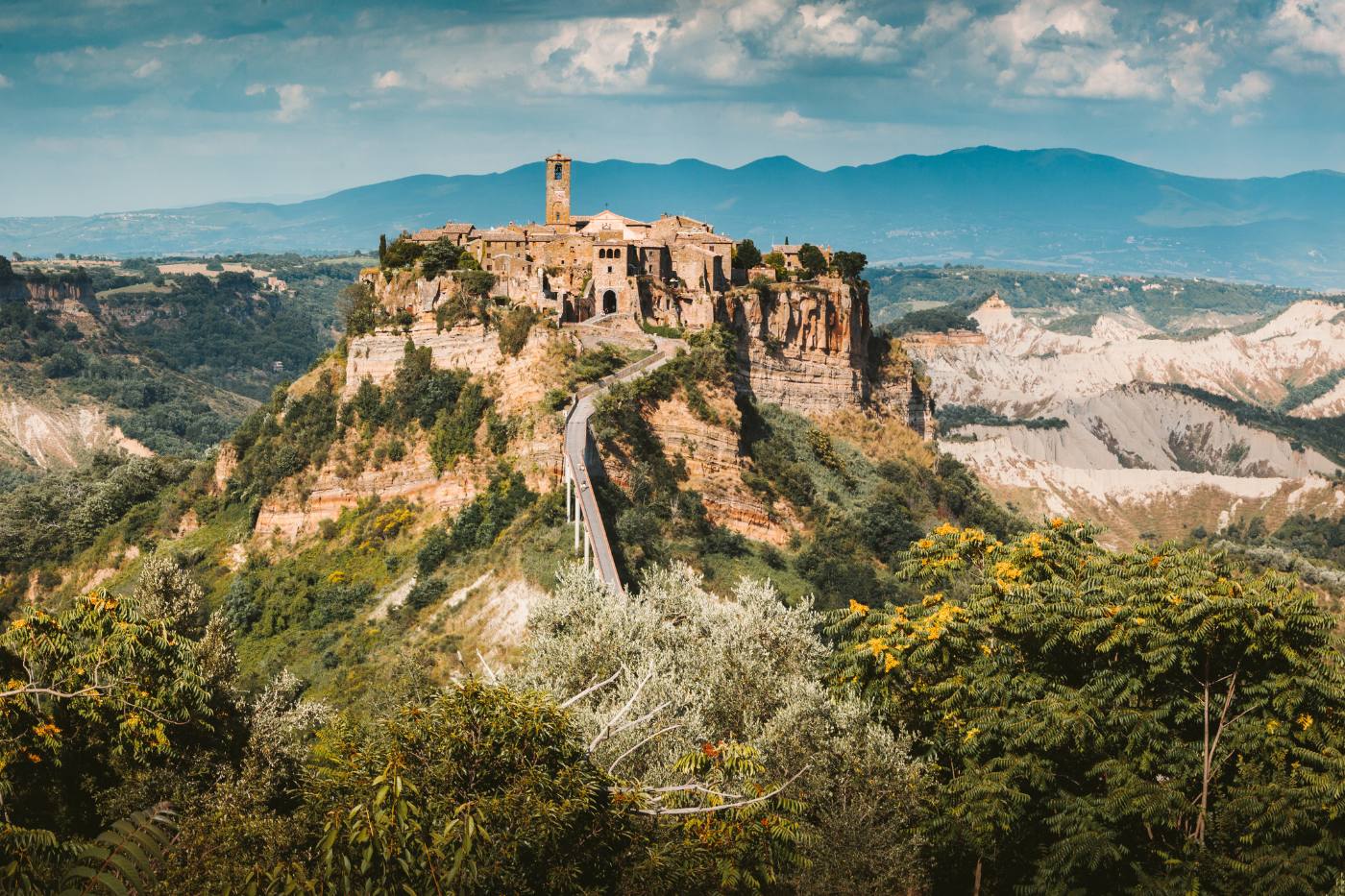
Perched on a fragile cliff constantly shaped by erosion and surrounded by a dramatic lunar landscape, Civita di Bagnoregio is a treasure chest containing more than 2,500 years of history. Looking at it feels like stepping into a fairy tale whose ending has yet to be written.
Known as “the dying city,” Civita has long been threatened by landslides, yet its final collapse has never come to pass. Home to only a handful of residents, it can be reached exclusively via a pedestrian bridge. Once there, visitors are welcomed by quiet lanes, stone houses, arches, and squares that preserve an atmosphere untouched by time.
Many believe the village inspired Japanese director Hayao Miyazaki when creating his famous animated film Spirited Away. Among its main attractions are the Church of San Donato and the Geological and Landslide Museum.
Bolsena
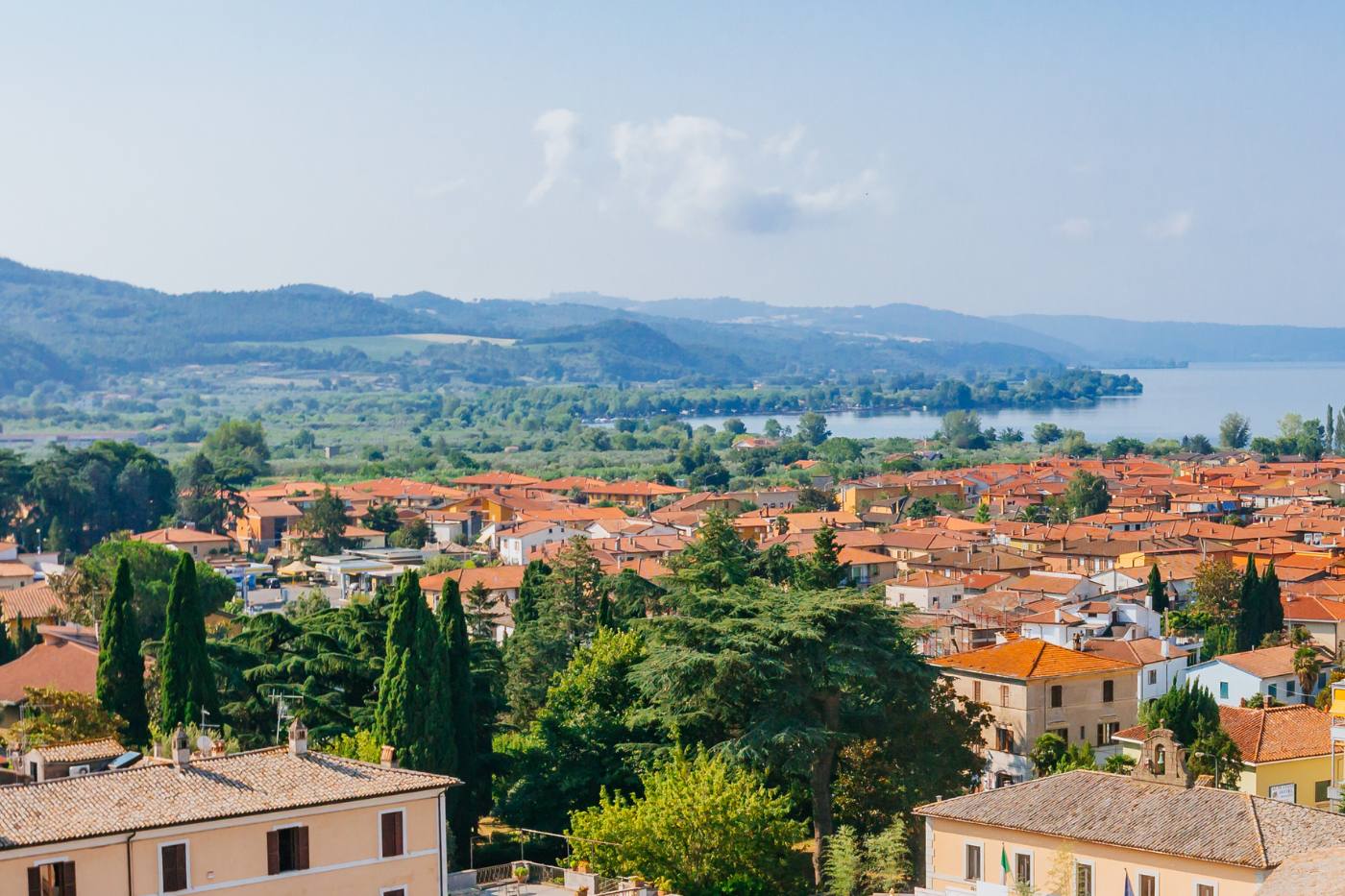
Perched on a hillside, gathered around a central square and stretching along the northern shore of the lake that bears its name, Bolsena is a charming medieval village where history, culture, and nature blend together in a fascinating mosaic.
Its historic center is delightful to explore, thanks to its architecture and monuments. The village is dominated by the imposing Rocca Monaldeschi della Cervara, built between the 11th and 14th centuries. It is well worth a visit, if only for the panoramic views from its ramparts. Inside the fortress is the Territorial Museum of Lake Bolsena.
Other highlights include the Basilica of Santa Cristina, linked to the Eucharistic Miracle of 1263 that gave rise to the Feast of Corpus Christi, and Palazzo del Drago, renowned for its remarkable Mannerist frescoes.
Allerona
Allerona is one of those villages you discover almost by chance but never forget. Nestled among the gentle hills of Umbria, it combines ancient history, unspoiled landscapes, and living traditions.
The remains of its medieval castle survive in the town walls, which are accessed through Porta del Sole (the eastern gate) and Porta della Luna (the western gate). The historic center is a maze of stone alleys winding around Piazza Santa Maria, overlooked by the Church of Santa Maria Assunta, home to works by Renaissance artists.
Additional points of interest include the former Dopolavoro Palace, which hosts the permanent exhibition of the Pugnaloni—decorated allegorical carts featured during the Feast of Saint Isidore—and Villa Cahen, an elegant example of Liberty-style architecture surrounded by a beautiful park.
Monteleone d’Orvieto
Situated on a hill 500 meters above sea level, Monteleone d’Orvieto is a picturesque village offering magnificent views over the unspoiled landscapes of the Val di Chiana.
Its connection to Orvieto goes beyond its name. During the Middle Ages, the two towns shared strong commercial ties, particularly in the trade of bricks and mosaics used in the construction of Orvieto Cathedral.
The historic center still retains its medieval character, with fortified walls, ruins, and ancient walkways. The village is especially recognizable for the distinctive red color of its buildings.
Among its main attractions are the Church of Saints Peter and Paul, which houses a painting from the school of Pietro Perugino, the Church of the Holy Crucifix with its beautiful Baroque altar, and the Teatro dei Rustici, one of the smallest theaters in Italy and Europe.
Lugnano in Teverina
Lugnano in Teverina is a small medieval jewel surrounded by hills, forests, olive groves, and vineyards. Walking through its stone streets and ancient houses, visitors are immersed in the intimate atmosphere that defines the village.
Here stands one of the most important Romanesque buildings in Umbria: the Collegiate Church of Santa Maria Assunta, a monument that alone is worth the journey. Its exterior is distinguished by an elegant colonnaded portico, while the interior preserves priceless works of art, including an Alexandrian-Cosmatesque mosaic floor and paintings from the Giotto school.
Other attractions include Palazzo Pennone, the nearby churches of Sant’Andrea and Santa Chiara, and, just outside the medieval gate, the Convent of Saint Anthony of Padua, nestled in a small oak woodland.
Five villages, five different atmospheres, all reachable from Orvieto in less than 40 minutes. Our advice is to visit one or two at a time, taking things slowly, and then return in the evening to the historic center of Orvieto—perhaps right here at Palazzo Guidoni, just 200 meters from the Cathedral, where the day can end with the same sense of calm with which it began.
Cinque borghi, cinque atmosfere diverse, tutti raggiungibili da Orvieto in meno di 40 minuti. Il consiglio è di visitarne uno o due alla volta, senza fretta, e tornare la sera nel centro storico di Orvieto — magari proprio qui, a Palazzo Guidoni, a duecento metri dal Duomo, dove la giornata può chiudersi con la stessa calma con cui è cominciata.
Return Home in the Heart of Orvieto
At Palazzo Guidoni, just 200 meters from the Cathedral: the ideal base for exploring the surrounding villages and returning without worries.
When you book directly through our website, you always get the best rate, with no intermediaries.