

Like many Umbrian towns, Orvieto has a rich craft tradition. Walking through the streets of the historic centre, it is easy to come across small workshops where age-old trades are handed down from generation to generation, producing unique, authentic pieces. You will find it hard to resist buying something to take home.
From the famous hand-painted ceramics to fine lace, by way of woodwork, leather and metalwork, Orvieto has a craft heritage with roots going back more than two thousand years. Let’s take a closer look at the main local specialities and see why they deserve a place in your suitcase.
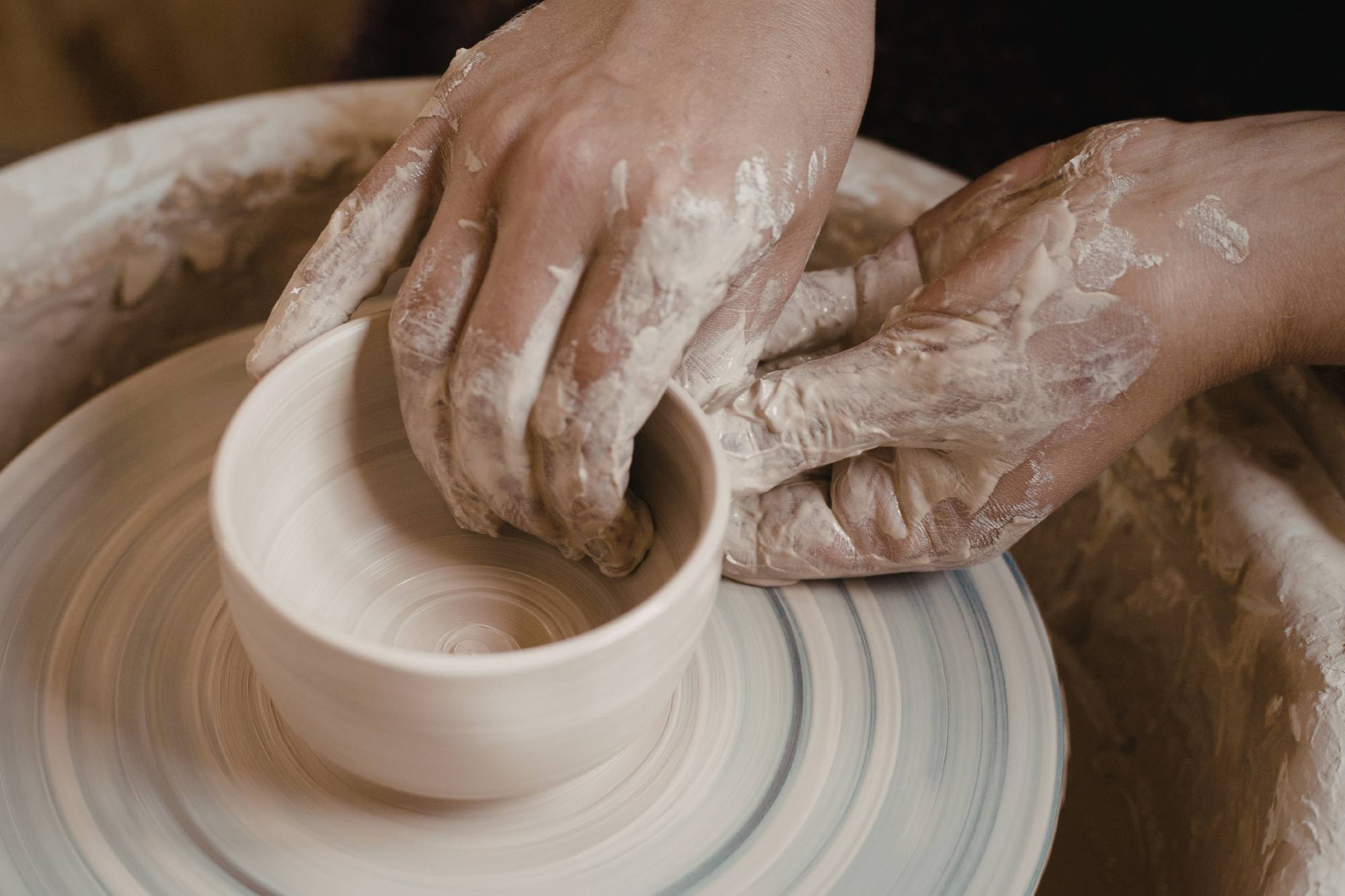
Orvieto ceramics
Among the most representative of Orvieto’s crafts is ceramics, an art with very ancient origins. Many Etruscan-era finds of pottery, bucchero ware and ceramic objects have come to light during excavations and restorations. But it was in the Middle Ages that this tradition reached its peak, becoming a model for other Italian pottery centres. The history of ceramics in Orvieto then went through different phases, alternating periods of great creative energy and wide distribution with periods of standstill.
Today, along Via del Duomo, Corso Cavour and the surrounding streets, there are many workshops where plates, jugs, vases, decorative tiles and homeware are made and painted entirely by hand. The decorations are often inspired by medieval motifs, the architectural details of the cathedral or symbols of Umbrian tradition, in bright colours such as blue, green, yellow and red. Every piece is different and reflects the patient work of the artisan, who combines techniques handed down over time with more contemporary interpretations.
Orvieto lace
Less well known, but just as precious, is Orvieto lace, which has its roots in Irish crochet lace. Its history is different from that of ceramics: more recent, but no less fascinating. In 1907, on the initiative of members of the local aristocracy, the Ars Wetana was founded, a patronage society designed to give working-class women a chance to earn money through work they could do at home. Irish lace was chosen both for its distinctive style and because the different stages of production could be shared among several workers.
The Ars Wetana ended its activity as a patronage society in 1974 and later became a private company. Even today, though, skilled lacemakers carry on this special craft with passion. While inspired by Irish lace, Orvieto lace has developed its own identity. Its typical ornamental motifs feature ivy, acanthus and vine leaves, delicate flowers, figures and animals taken from the cathedral’s bas-reliefs, all captured in an almost weightless weave.
Artistic woodwork
Another important craft tradition in Orvieto is woodwork. Although its origins are very old, its history is closely tied to Gualverio Michelangeli (1929–1986), who made Orvieto woodcraft famous through original works that can still be seen in parts of the town. He created a style of his own, which many respected woodworkers have drawn on over the years. A lane in the town is even named after him.
This age-old craft still lives on today in the workshops of the historic centre, where wood takes shape through skilled handwork. Sculptures, bas-reliefs, furnishings and decorative objects show the artisans’ ability to create unique pieces, the fruit of patience, technique and passion. Each work carries the value of knowledge handed down over time, enriched by new interpretations of this art form.
Other artisan workshops
Orvieto’s crafts are not limited to ceramics, lace and wood. The historic centre has many workshops keeping other traditional crafts alive.
Leatherworkers offer belts, bags, wallets, diaries and accessories finished by hand, often personalised. Wrought-iron smiths make everyday objects and furnishings, such as lamps, coat stands and candle holders, crafted with great care and attention to detail. And there are jewellery workshops, where contemporary goldsmithing meets ancient techniques such as granulation.
To discover every side of the town, including its craft traditions, Hotel Posta welcomes you in the heart of the historic centre, a short walk from the historic workshops and the most important monuments. It is an ideal starting point for immersing yourself in the history, culture and unique atmosphere of Orvieto.