

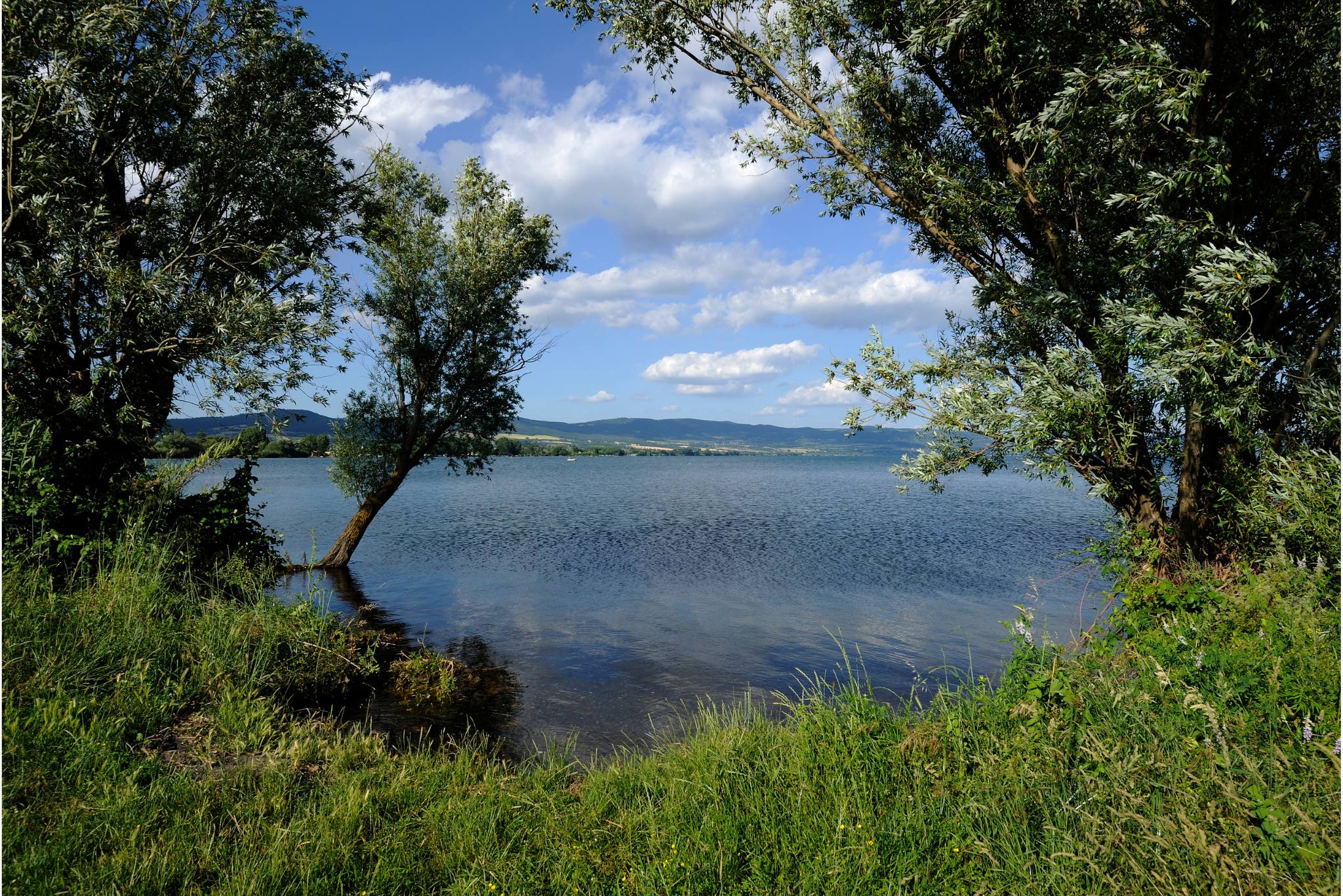
Just over 20 kilometres from the Hotel Posta, Lake Bolsena holds a quiet, authentic beauty that surprises with every visit. It is the largest volcanic lake in Europe, born thousands of years ago from the eruptions of the Vulsini Mountains, and still today it offers breathtaking views, clear waters and an atmosphere out of time. Along its shores, perfectly preserved medieval villages alternate with ancient Etruscan traces and places rich in charm.
For those staying in Orvieto, Lake Bolsena is one of the most popular excursions, thanks to the short distance between the two. Whether it’s a trip of a few hours or a full day devoted to discovering the area, here are the places and sights not to miss on a visit to Lake Bolsena.
Bolsena: The Village That Gave the Lake Its Name
Once you reach Lake Bolsena, the first stop can only be the village that gave it its name. Set on the slopes of the Vulsini Mountains, it keeps a rare balance between nature, history and spirituality. Its compact, well-tended historic centre deserves a slow walk among stone alleys, characterful little squares and panoramic glimpses that offer magnificent views over the lake. The village is dominated by the Rocca Monaldeschi della Cervara, a majestic medieval fortress housing the Territorial Museum of Lake Bolsena, rich in Etruscan, medieval and naturalistic finds. At the foot of the castle rises the Renaissance Palazzo del Drago, with fine sixteenth-century frescoes. But Bolsena’s most important monument is, without doubt, the Basilica of Santa Cristina, known as the place where the Eucharistic Miracle of 1263 took place.
Grotte di Castro: Between Etruscan Civilisation and the Middle Ages
Climbing inland from the western shore of the lake, you reach the charming village of Grotte di Castro. Set on the northern part of the rim of the ancient volcanic cone belonging to the Vulsini range, it boasts very ancient origins dating back to the Etruscan age, as countless archaeological finds attest. Strolling through the stone alleys of the historic centre is like stepping back in time, among old palazzi, striking basilicas and breathtaking views. Among the village’s main attractions are the Basilica of Santa Maria del Suffragio of 1625, with its distinctive Antiquarium; the Civita Archaeological Museum, housed in a Renaissance palazzo designed by the illustrious architect Jacopo Barozzi da Vignola; and the Etruscan necropolises of Pianezze and Centocamere.
Capodimonte: The Terrace Over the Lake
Also called the “gem of Lake Bolsena,” Capodimonte is a picturesque village of medieval layout perched on a promontory, offering extraordinary panoramic views in every direction. Its historic centre is an enchanting maze of cobbled streets, archways and little squares. Particularly characteristic is the walk that crosses the village: from the top of the promontory you descend towards the lakefront, following the whole shoreline. The town is built around the Rocca Farnese, today privately owned but open to visits on request. Surrounded by a fine Italian garden, it was originally a square tower, enlarged in the fifteenth century to a design by Antonio da Sangallo the Younger. Among its churches, the Collegiate of Santa Maria Assunta stands out, a treasure chest of precious artworks and frescoes.
Marta: The Fishermen’s Village
Continuing along the southern shore of Lake Bolsena you come to Marta, an old fishing village that offers moments of relaxation amid old-world atmosphere and walks along the lakefront. Set on a hill, it keeps its medieval character intact, with cobbled lanes and stone houses. The town grew up around the ancient Rocca, built at the wish of Pope Urban IV in the second half of the thirteenth century, of which little remains beyond a few traces and the fine Clock Tower. A symbol of Marta at least as much as the Feast of the Madonna del Monte (14 May), the tower has been altered and restored many times over the centuries. From its height of 21 metres you can enjoy a spectacular view over the lake. Other things to see include the Collegiate Church of Saints Blaise and Martha and the Sanctuary of the Madonna del Monte.
The Bisentina and Martana Islands: The Lake’s Jewels
One of the most distinctive features of Lake Bolsena is the presence of two islands rising from its waters, which help make the lakeside landscape unique: Bisentina Island and Martana Island. Bisentina Island is the larger of the two and is considered one of the most fascinating places in the area. Immersed in vegetation and rich in historical traces, it holds Renaissance chapels, religious buildings and nature trails that make it a particularly evocative destination. Martana Island, wrapped in mystery, is privately owned and cannot be visited. Skirting it by boat, however, allows you to admire from a unique perspective its steep shores and the impenetrable aura that, for centuries, has fed myths and legendary tales.
Montefiascone: The Village Suspended Above the Lake
Set on the summit of the highest hill of the Vulsini Mountains, at around 590 metres above sea level, Montefiascone dominates the south-eastern shore of Lake Bolsena, offering splendid panoramic views. Famous for its Est! Est!! Est!!! wine, it boasts a long winemaking tradition that draws enthusiasts from all over the world. Montefiascone’s main monument is the Cathedral of Santa Margherita, marked by its imposing dome, one of the largest in Italy, built to a design by the architect Carlo Fontana in the seventeenth century. Other attractions worth a visit include the Church of San Flaviano, in Romanesque-Gothic style, known for its medieval frescoes and for the unusual feature of having two distinct floors; and the Rocca dei Papi, the ancient fortress raised at the wish of Pope Innocent III at the end of the twelfth century.
A Lake to Discover at Leisure, with Orvieto as Your Base
The beauty of Lake Bolsena is that it isn’t exhausted in a single stop: each village has its own character, and to explore them without rushing it helps to have a fixed point to return to. From Orvieto it’s just over twenty minutes, which makes it the perfect excursion for a day — or even just an afternoon, back in time for the evening in town.
Before setting off for the lake, it’s well worth giving time to the town itself: you’ll find everything in our guide on what to see in Orvieto.
The Hotel Posta, inside the sixteenth-century Palazzo Guidoni in the heart of the historic centre, is the right place to move from: choosing where to stay in Orvieto means having the town within walking distance and the whole region around you to explore.